We are pleased to republish “Spanish Tile Journey,” a travel column originally written by our company president, Naoyuki Yamauchi, for The Times Housing Newspaper, a local publication covering housing and lifestyle in Okinawa and part of the Okinawa Times Group.
A Station That Soothes the Soul
Step inside Madrid’s Atocha Station, and it feels as if you have entered a tropical garden.
Palm trees stretch toward the high glass-and-steel roof, while hundreds of lush plants grow around ponds throughout the station. Fine mist drifts down over the greenery, creating an atmosphere that feels almost like a jungle.
The indoor garden covers about 4,000 square meters and is located near the Reina Sofía Museum, home to Picasso’s masterpiece Guernica, which depicts the horrors of the Spanish Civil War.
Just be careful not to become so absorbed in the tropical scenery that you miss your train.
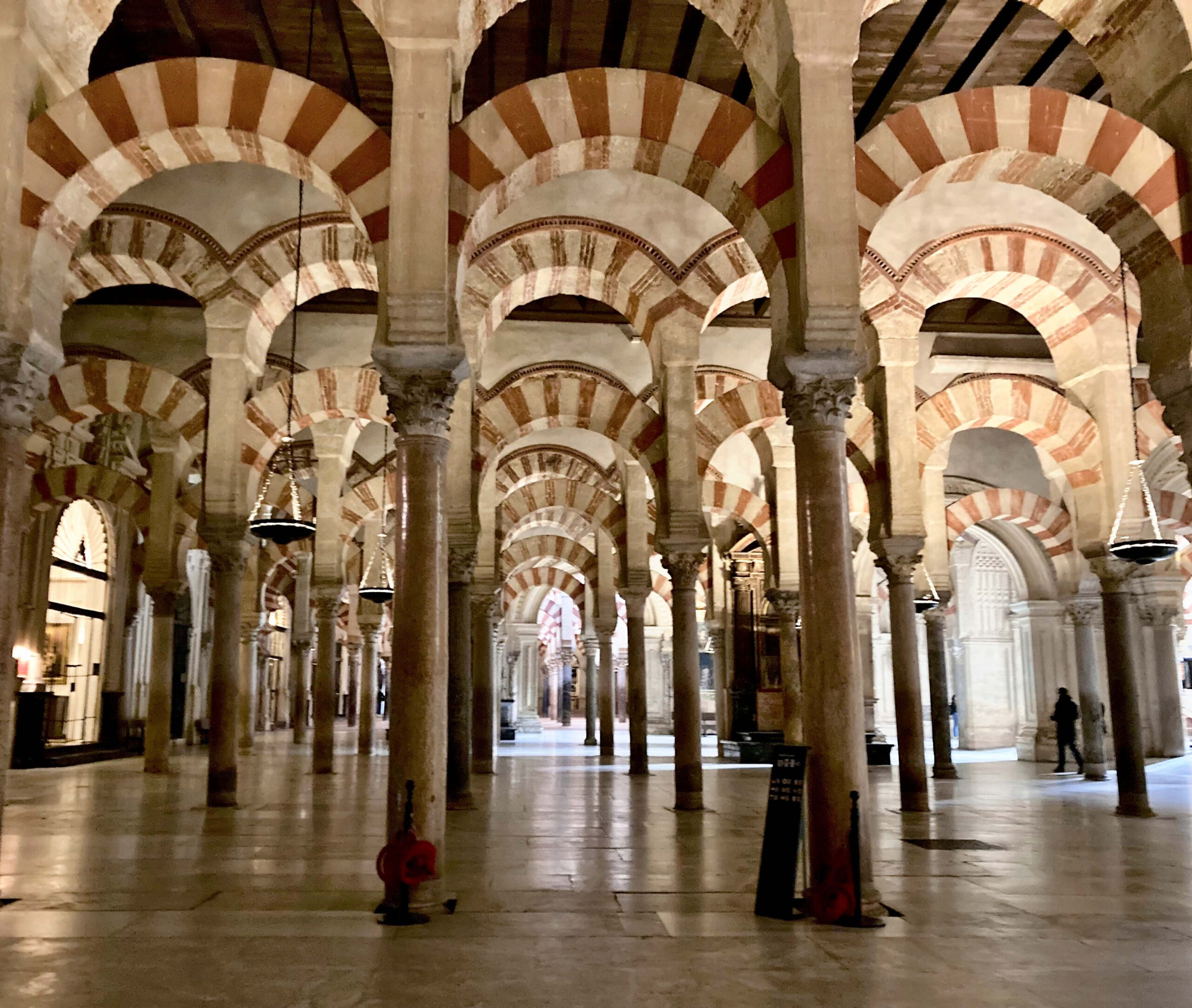
The Mezquita
From Atocha Station, I boarded the AVE, Spain’s high-speed rail service, and headed south toward Andalusia.
The train slowly made its way out of Madrid before picking up speed. As we entered La Mancha, the setting of Don Quixote, the scenery outside changed to endless olive groves and dry, reddish earth.
The ride was every bit as smooth and comfortable as Japan’s Shinkansen.
After nearly two hours, we arrived in Córdoba, one of Andalusia’s historic provincial capitals.
I took a taxi from the station and got out in the Jewish Quarter near the famous Mezquita.
When many Japanese people picture Spain, they probably imagine flamenco, whitewashed houses, and bullfighting. Those images are especially characteristic of Andalusia.
As I walked through the narrow streets, rows of whitewashed houses appeared on either side, their walls decorated with colorful flowerpots.
Then I heard the sound of a Spanish guitar drifting through the streets.
It was the familiar melody of Concierto de Aranjuez.
At the end of one narrow lane was a small plaza. A guitarist was playing for a group of about ten tourists.
To my surprise, he was Japanese.
Perhaps it was the unexpected comfort of seeing another Japanese person so far from home, or perhaps it was simply the beauty of the music, but I suddenly felt deeply moved.
The case in front of him was already filled with tips.
◇ ◇
Seville’s Spring Fair
From Córdoba, it takes about 40 minutes by AVE to reach Seville.
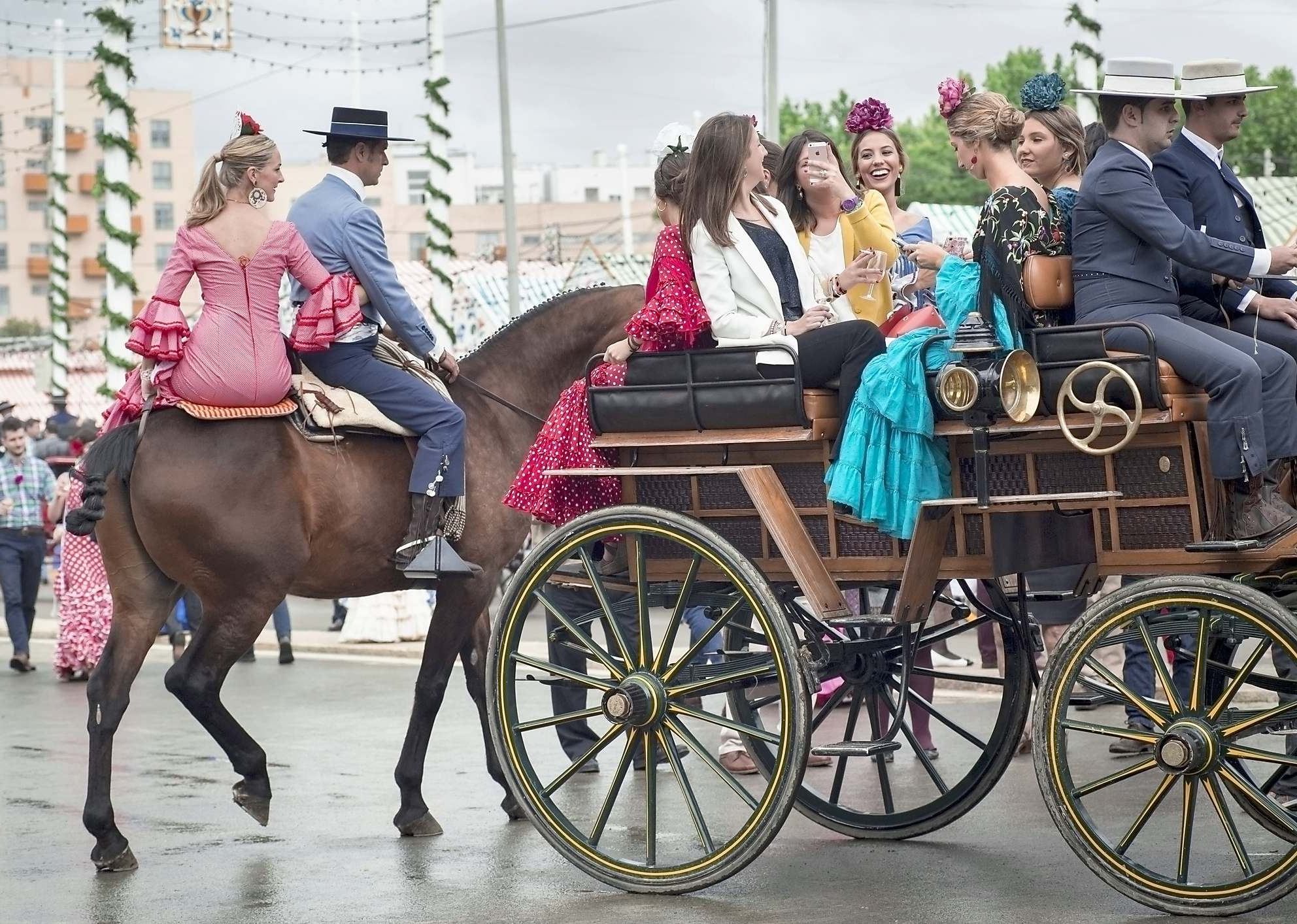
When I visited, the city was right in the middle of the Feria de Abril, Seville’s famous Spring Fair and one of Spain’s major traditional festivals.
More than a thousand large private tents, known as casetas, line the fairgrounds. Day and night, people gather to eat, drink, sing, and dance.
Women wear colorful traditional dresses and large flowers in their hair. Even men who normally dress quite simply are transformed in fitted pants, jackets, and flat-brimmed Córdoba-style hats, looking stylish and full of character.
The men arrive on horseback, often with women riding with them, making a grand entrance into the fairgrounds.
All around, women dance the sevillanas, a traditional style closely associated with Seville, with bright smiles on their faces.
It is a festival that feels like a celebration of life itself—people coming together simply to share the joy of being alive.

About the Author
Naoyuki Yamauchi was born in Okinawa City, Okinawa. After studying in the United States, he worked for an American trading company before founding Pantech Corporation, a Spanish tile distributor, in 1995.
He enjoys fishing, music, and collecting jazz records from the 1950s and 1960s.