We are pleased to republish “Spanish Tile Journey,” a travel column originally written by our company president, Naoyuki Yamauchi, for The Times Housing Newspaper, a local publication covering housing and lifestyle in Okinawa and part of the Okinawa Times Group.
Paella in Spain’s Rice Country
There is a wildly adventurous man named Jyrki.
He was the first representative I worked with at one of our Spanish tile suppliers. He is the type of person who will try just about anything. Apparently, he once caught cholera during a business trip to India.
Perhaps because he comes from Finland, a country known for its bitterly cold winters, he can also handle an unbelievable amount of alcohol.
Trying to keep up with him is simply too much, so I have learned to make a graceful escape whenever necessary.
When Jyrki once visited Okinawa, a few of my friends decided to challenge him, thinking, “Surely we can beat him with awamori.”
The drinking contest lasted until morning.
The result? A complete defeat.
The next day, every one of my friends took the day off from work.
It was Jyrki who took me to Albufera Lagoon, located just south of Valencia on Spain’s eastern coast.
Beautiful rice fields stretch across the surrounding countryside, dotted with traditional farmhouses.
Paella, one of Spain’s most famous rice dishes, actually originated here in Valencia.
Along the shores of the lagoon lies the village of El Palmar, where you will find numerous restaurants serving excellent paella.
Seafood paella made with fresh Mediterranean ingredients is, of course, a favorite, but the local specialty is Valencian paella made with rabbit and chicken.
There is also squid-ink paella, a dish that many Okinawans would probably enjoy.
El Palmar is only about a 30-minute taxi ride from central Valencia, so if you have the chance, I highly recommend experiencing authentic paella in the place where it was born.
A City of Remarkable Architecture
From the 15th through the 18th centuries, Valencia prospered through the silk trade.
In the heart of the city stands La Lonja de la Seda, the historic Silk Exchange, a magnificent Gothic building that is now a UNESCO World Heritage Site.
The western end of the Silk Road did not stop in Venice, Italy. Trade routes continued across the Mediterranean all the way to Spain.
Valencia grew to become Spain’s third-largest city and remains an important center of trade today.
Spain was once made up of many individual kingdoms and regions, each with its own distinct identity. Valencia itself was once surrounded by high defensive walls, and traces of that history can still be seen at the Serranos Towers on the northern side of the old city.
This history helps explain why Spain has such strong regional differences in culture and language.
Valencian is taught as a required subject in local schools, and most people in the region understand the language.
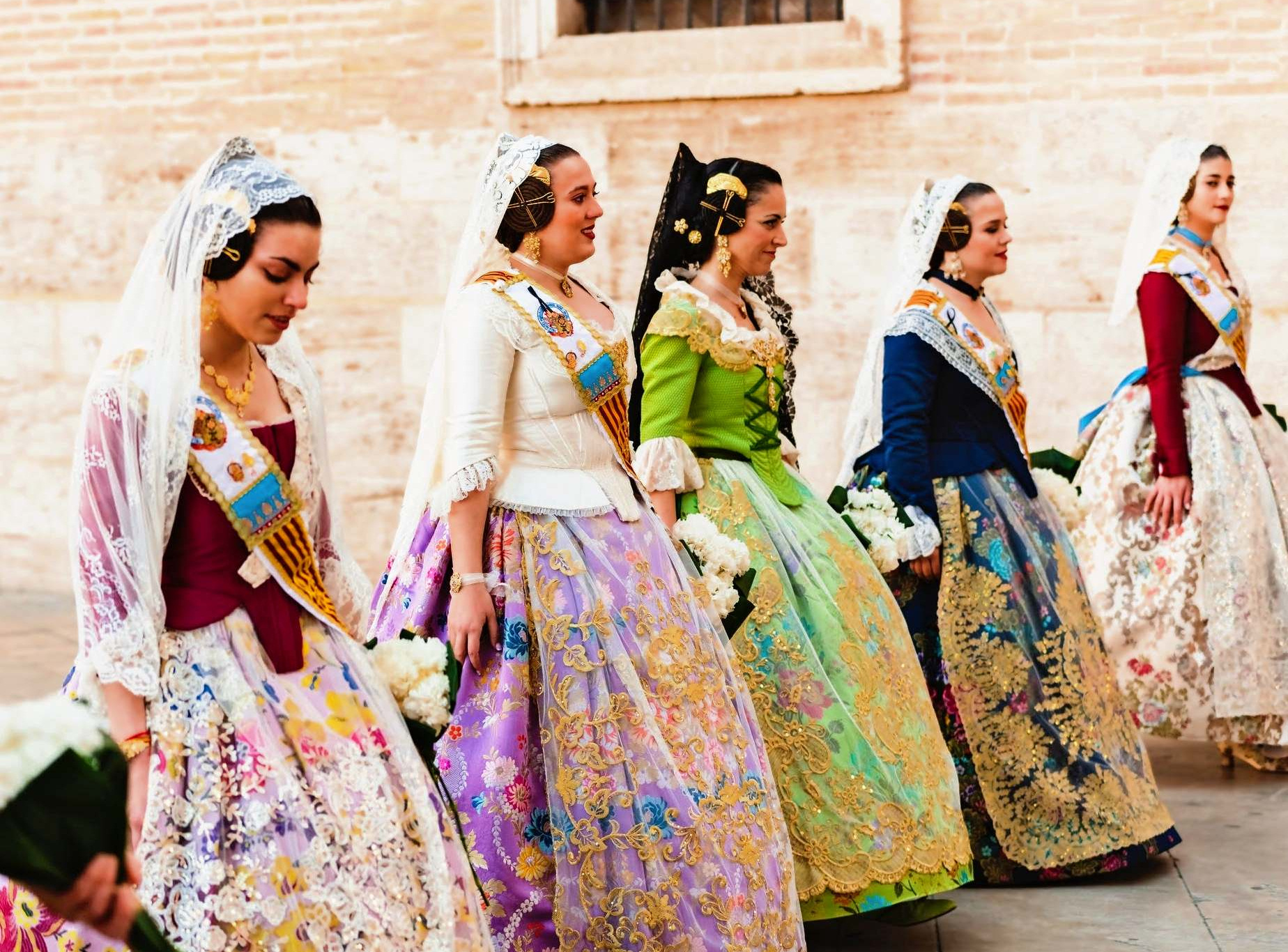
Valencia’s traditional clothing is equally distinctive.
During the flower-offering parade held as part of the Fallas Festival, women wear elaborate traditional dresses that may be among the most ornate in all of Spain.
Their silk gowns are decorated with intricate embroidery in gold and silver thread. Their hair is styled into distinctive coils above each ear and adorned with decorative gold combs and pins.
The elegant appearance of these traditional costumes offers a glimpse of the wealth and prosperity Valencia once enjoyed.
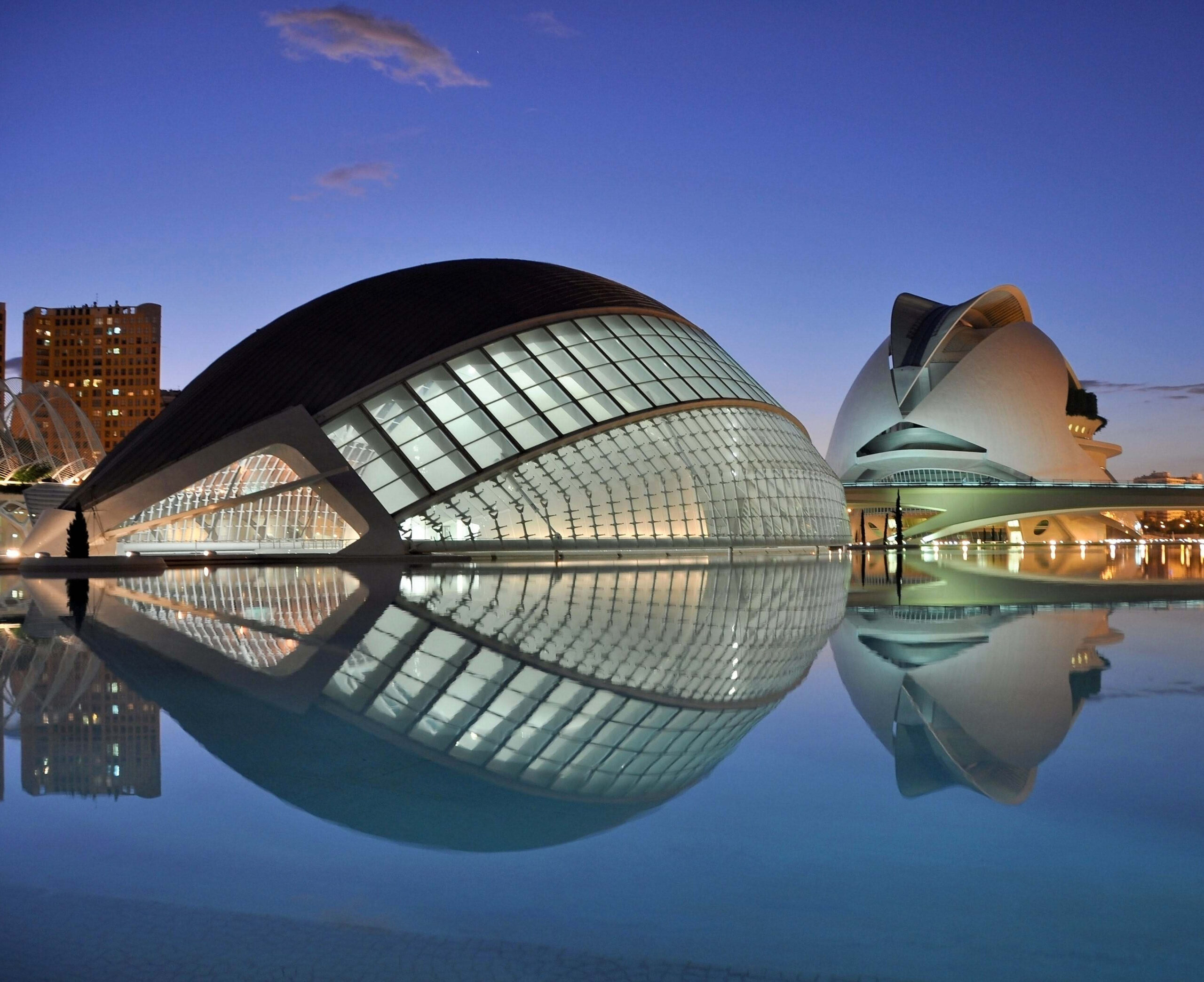
Another place you should not miss in Valencia is the City of Arts and Sciences, a spectacular complex of futuristic buildings designed by architect Santiago Calatrava and located at the eastern end of the Turia Gardens.
The complex was even used as a filming location for the science-fiction movie Tomorrowland, starring George Clooney.
Among its remarkable buildings are the Prince Felipe Science Museum, with a structure that resembles the skeleton of a giant prehistoric creature, and the Palau de les Arts Reina Sofía, whose dramatic shape looks almost like a futuristic robotic helmet.
Even if you do not go inside, the architecture alone is worth seeing.
At sunset, when these striking white structures are reflected in the surrounding pools of water, the entire scene looks like a city from the future.
One evening, after having dinner with Yuriki, we returned to his apartment. Cars were lined up along the street, and there was no space left to park.
Then Yuriki did something I did not expect.
He gently bumped the car in front with his bumper and pushed it forward with his own car. Once he had created enough room, he calmly pulled into the space as if nothing unusual had happened. Then, for good measure, he gave the car behind him a little nudge as well.
I asked him if it was really okay to bump into other cars like that.
“A bumper is there to be bumped,” he said.
Apparently, this was considered a perfectly normal parking technique there.
In Japan, even a tiny scratch can become a major issue. Sometimes I think it would be nice to be a little more relaxed about things, like the drivers there.
I was also told that one of the unwritten rules of street parking was not to set the parking brake, so the car could be moved if necessary.

About the Author
Naoyuki Yamauchi was born in Okinawa City, Okinawa. After studying in the United States, he worked for an American trading company before founding Pantech Corporation, a Spanish tile distributor, in 1995.
He enjoys fishing, music, and collecting jazz records from the 1950s and 1960s.