We are pleased to republish “Spanish Tile Journey,” a travel column originally written by our company president, Naoyuki Yamauchi, for The Times Housing Newspaper, a local publication covering housing and lifestyle in Okinawa and part of the Okinawa Times Group.
「いま」を重ねた建築
“God is in no hurry.”
That was the guide’s reply when a construction company executive traveling with us from Okinawa asked, “When is the project scheduled to be completed?”
There was something strangely convincing about the answer—the vast difference between God’s sense of time and the limited time given to us as human beings.
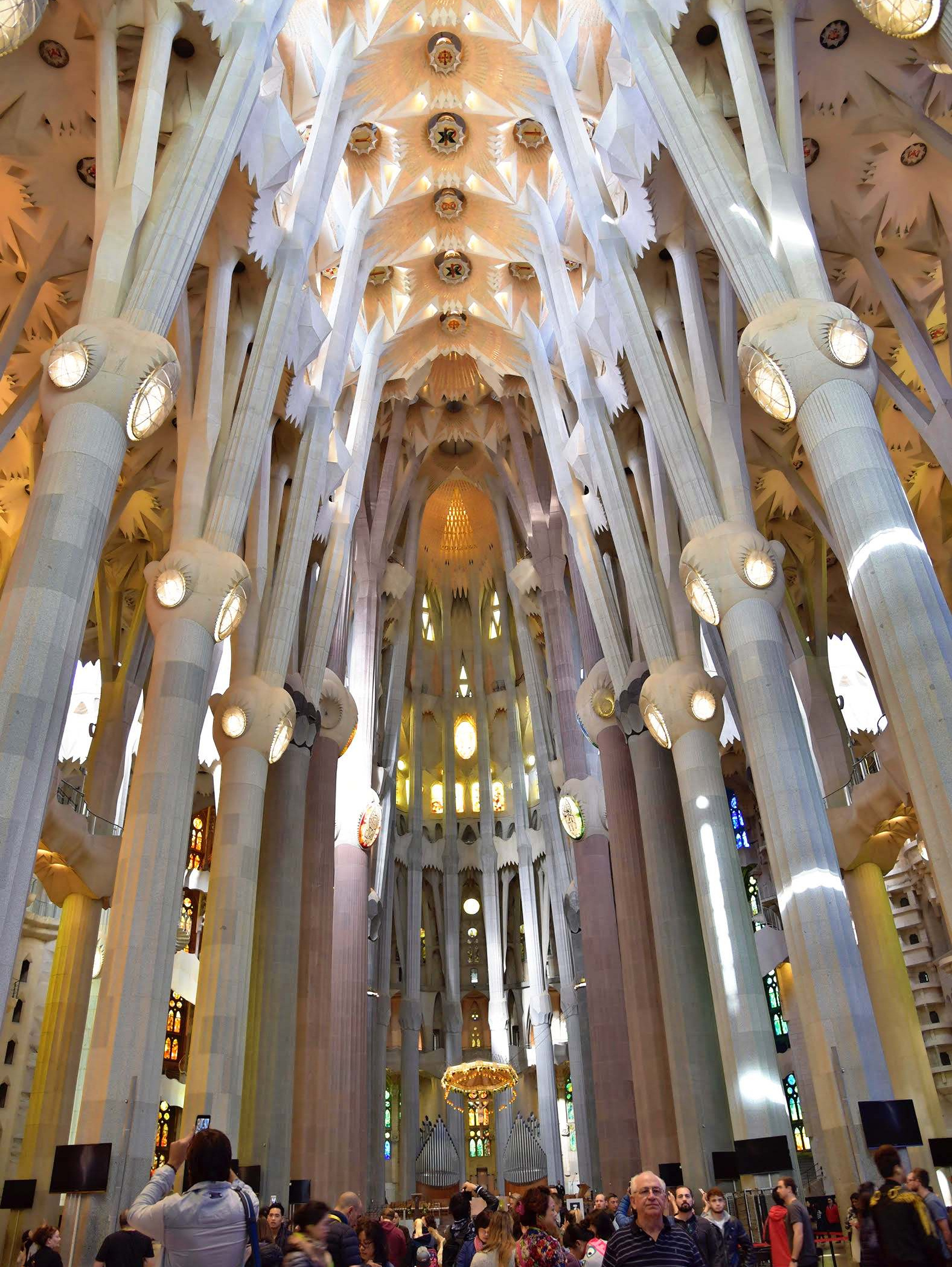
When I first visited the Sagrada Família in Barcelona in 1995, the central basilica had no roof, and cranes moved constantly across what still looked very much like an active construction site.
Construction had begun in 1882, and at the time people said it might take as long as 300 years to complete.
And yet, look at it now.
The basilica itself has taken shape, and rainbow-colored light pours through the stained-glass windows. A ninth tower, the Tower of the Virgin Mary, crowned with a luminous star, now rises above the complex. At one point, completion had even been projected for 2026, although that schedule was later delayed after construction was interrupted during the COVID-19 pandemic.
When I think about it, I wonder how many people have devoted their lives to the construction of the Sagrada Família.
Japanese sculptor Etsuro Sotoo, who was entrusted with overseeing major decorative work despite being from outside Spain, once expressed an idea that has stayed with me: if you simply wait for the thing you truly want to do someday, without giving your full attention to what is in front of you now, that moment may never come. The moment you long for is, in fact, the present—and that is why we must live seriously and wholeheartedly in the here and now.
Compared with the history of the Earth and the natural world, a human life is incredibly short.
That is exactly why it is so important to live fully in the present.
A Master of Tilework
Advance reservations are required to enter the Sagrada Família, so be sure to plan ahead. I recommend purchasing a ticket that includes both admission to the basilica and elevator access to one of the towers.
From the top, you can enjoy sweeping views across Barcelona.
The great architect Antoni Gaudí left many other remarkable works throughout the city.
Among them are Park Güell, his visionary garden complex famous for its mosaic-covered dragon; Casa Milà, an apartment building celebrated for its flowing curves; and Casa Vicens, which incorporates strong Moorish influences.
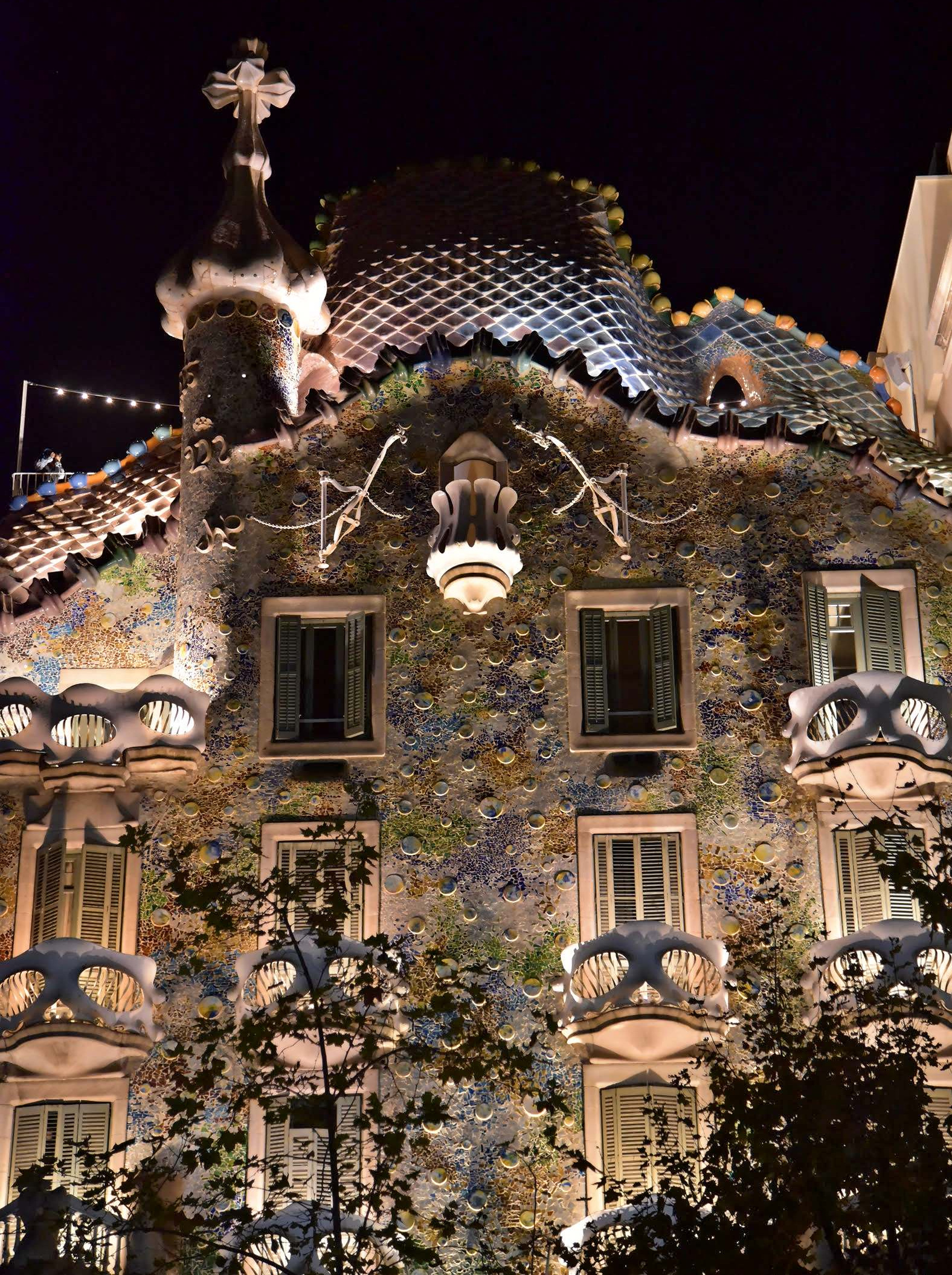
For anyone who loves tile, however, one place I especially recommend is Casa Batlló, located about a five-minute walk from Casa Milà.
Its exterior features shimmering glass mosaics inspired by the sea, mask-like balconies, and colorful stained glass.
Inside, the central light well is finished with blue tiles arranged in a beautiful gradient. Looking upward, it almost feels as if you are standing beneath the surface of the ocean.
Gaudí understood both the durability and artistic potential of tile, and he used it extensively throughout his architecture.
Catalonia and the Independence Movement
When I visited Barcelona in November 2017, the Catalan independence movement was at its height.
Catalan flags hung from apartment balconies, and a heavy police presence surrounded the regional parliament and City Hall. The previous month, the Catalan Parliament had declared independence, and crowds had gathered throughout the city amid intense political tension.
Catalans have their own language and a strong sense of pride in their culture. Their history is complex, shaped in part by periods when the Catalan language, culture, and institutions were suppressed, particularly under the Franco dictatorship.
Watching what was unfolding around me, I could not help feeling that some of the questions surrounding regional identity, language, and culture might also resonate with people from Okinawa.
I later visited the square in front of Barcelona Cathedral in the Gothic Quarter.
There, people of all ages and backgrounds were holding hands in a circle and dancing the sardana, a traditional Catalan dance.
In the midst of all the political tension, it was a simple scene of happiness and peace.
◇ ◇
Thank you for joining me on this journey over the past year.
May peace come to Ukraine as soon as possible.
— End —

About the Author
Naoyuki Yamauchi was born in Okinawa City, Okinawa. After studying in the United States, he worked for an American trading company before founding Pantech Corporation, a Spanish tile distributor, in 1995.
He enjoys fishing, music, and collecting jazz records from the 1950s and 1960s.