We are pleased to republish “Spanish Tile Journey,” a travel column originally written by our company president, Naoyuki Yamauchi, for The Times Housing Newspaper, a local publication covering housing and lifestyle in Okinawa and part of the Okinawa Times Group.
Granada — A Palace Glowing in the Sunset
The courtyard of the monastery was wrapped in morning mist.
In the stillness, the only sounds were the splash of the fountain at the center of the garden and the echo of my own footsteps along the tiled walkway.
This was the Alhambra in Granada, a city in southern Spain.
Within the palace complex stands the former Convent of San Francisco, now used as a state-run hotel. Its square courtyard is surrounded by arches, with green vines climbing around the columns that support them.
As I walked through the arcade, I came to a brick archway. On the cool marble beneath my feet was an inscription beginning with the words “Queen Isabella.”
It marked the place where Queen Isabella had once been buried.
The simplicity of it surprised me.
Few people in Spain are unfamiliar with Queen Isabella, who played a central role in completing the Christian reconquest of the Iberian Peninsula after centuries of Muslim rule. Her reign saw the fall of Granada, the last Muslim-ruled kingdom in Spain, including the Alhambra.
She also supported Christopher Columbus’s voyage across the Atlantic, helping set the stage for Spain’s expansion into the Americas and the rise of its Golden Age.
I later learned that, according to her wishes, Isabella was initially buried at this monastery. Her remains were later moved to the magnificent Royal Chapel in central Granada.
A Masterpiece of Art and Craftsmanship
The true splendor of the Alhambra can be seen in its heart: the Nasrid Palaces.
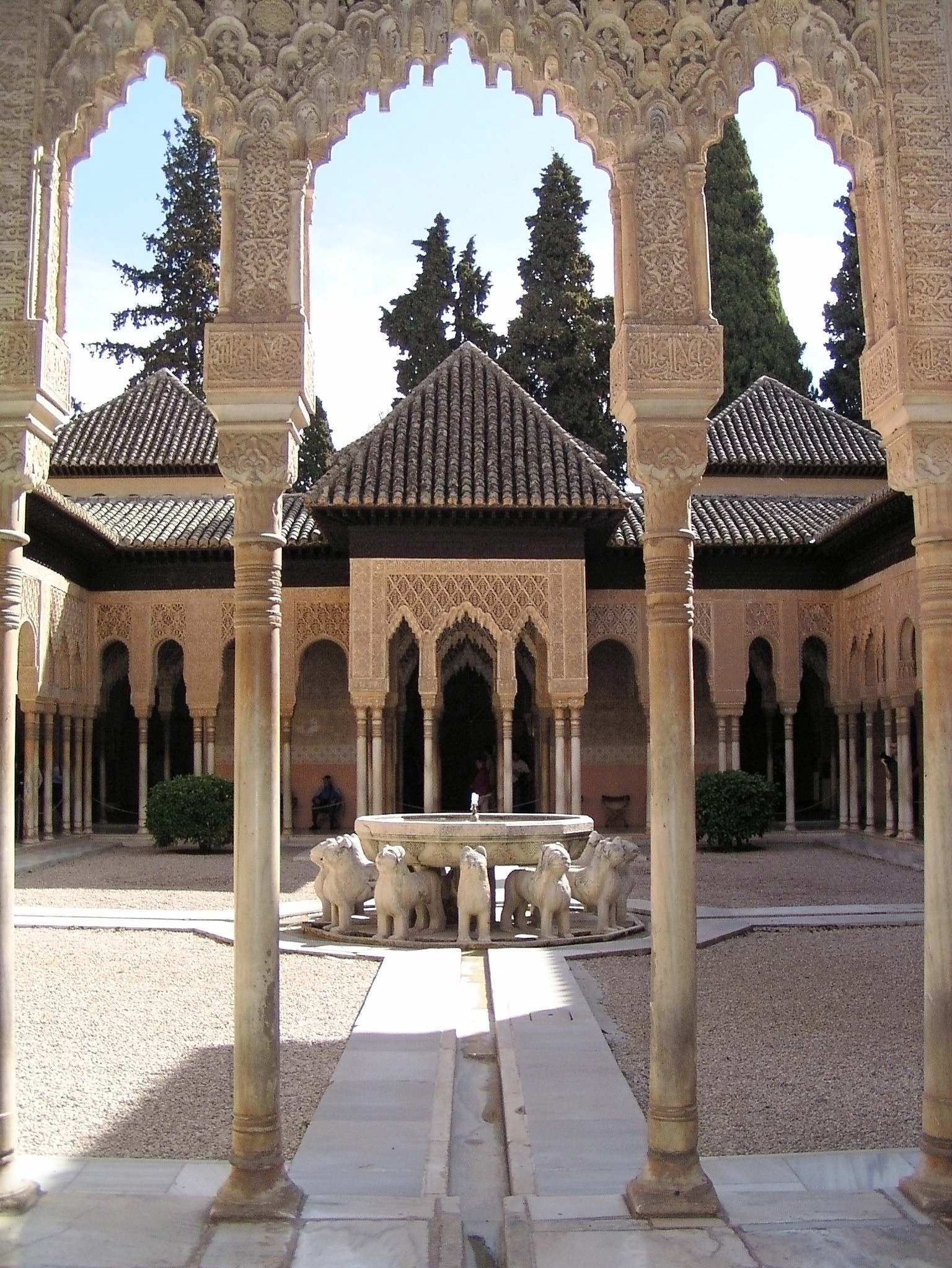
The Court of the Lions, intricately carved walls, and elaborate muqarnas decorations are considered some of the finest achievements of Islamic art.
Walls and columns are covered with mosaics made from tiles cut into a variety of geometric shapes and arranged into intricate arabesque patterns inspired by plants, geometry, and Arabic calligraphy. Remarkably, much of this decoration has survived since the 13th century.
These mosaics could even be considered one of the origins of the Spanish tile tradition.
Looking through one of the palace’s horseshoe-shaped arches, I caught sight of the landscape beyond.
Between tall cypress trees, whitewashed houses climbed a hillside in the distance. This was the Albaicín, Granada’s oldest historic neighborhood, originally developed under Muslim rule and still preserving much of its distinctive character.
I wondered how the Muslim rulers who witnessed the rise and fall of their kingdom must have viewed this same landscape centuries ago.
In my mind, I could almost hear the guitar melody of the famous Recuerdos de la Alhambra—“Memories of the Alhambra.”
◇ ◇
If you have time, I also recommend visiting the Generalife, the Alhambra’s former summer palace.
Behind it rise the Sierra Nevada mountains, whose peaks remain snow-covered for much of the year. Meltwater from the mountains was carried over long distances to supply the palace and its gardens.
Using the natural difference in elevation, fountains were designed to send water into long, narrow pools surrounded by greenery and flowers.
For people who came from arid regions, access to abundant water was a powerful symbol of wealth and prosperity. The Generalife also shows that the Muslim builders of the time possessed not only remarkable tile-making and architectural skills, but also highly advanced civil engineering knowledge.
That same mountain water also flows through channels within the Alhambra.
It looks so cold and clear that one of our employees once scooped some up and drank it.
I would not recommend following his example.
He spent the rest of that day—and well into the next—making repeated trips to the restroom.
The Red Palace at Sunset
In the Albaicín, maze-like lanes wind between rows of whitewashed houses.
In the late afternoon, I made my way up the cobblestone streets toward the Church of San Nicolás at the top of the hill.
From the plaza in front of the church, I could see the Alhambra across the valley beyond the Darro River, glowing red in the setting sun.
It was easy to understand the meaning behind its Arabic name, often interpreted as “the Red Castle.”
Behind the palace, the snowcapped Sierra Nevada mountains were also tinged with soft shades of pink.
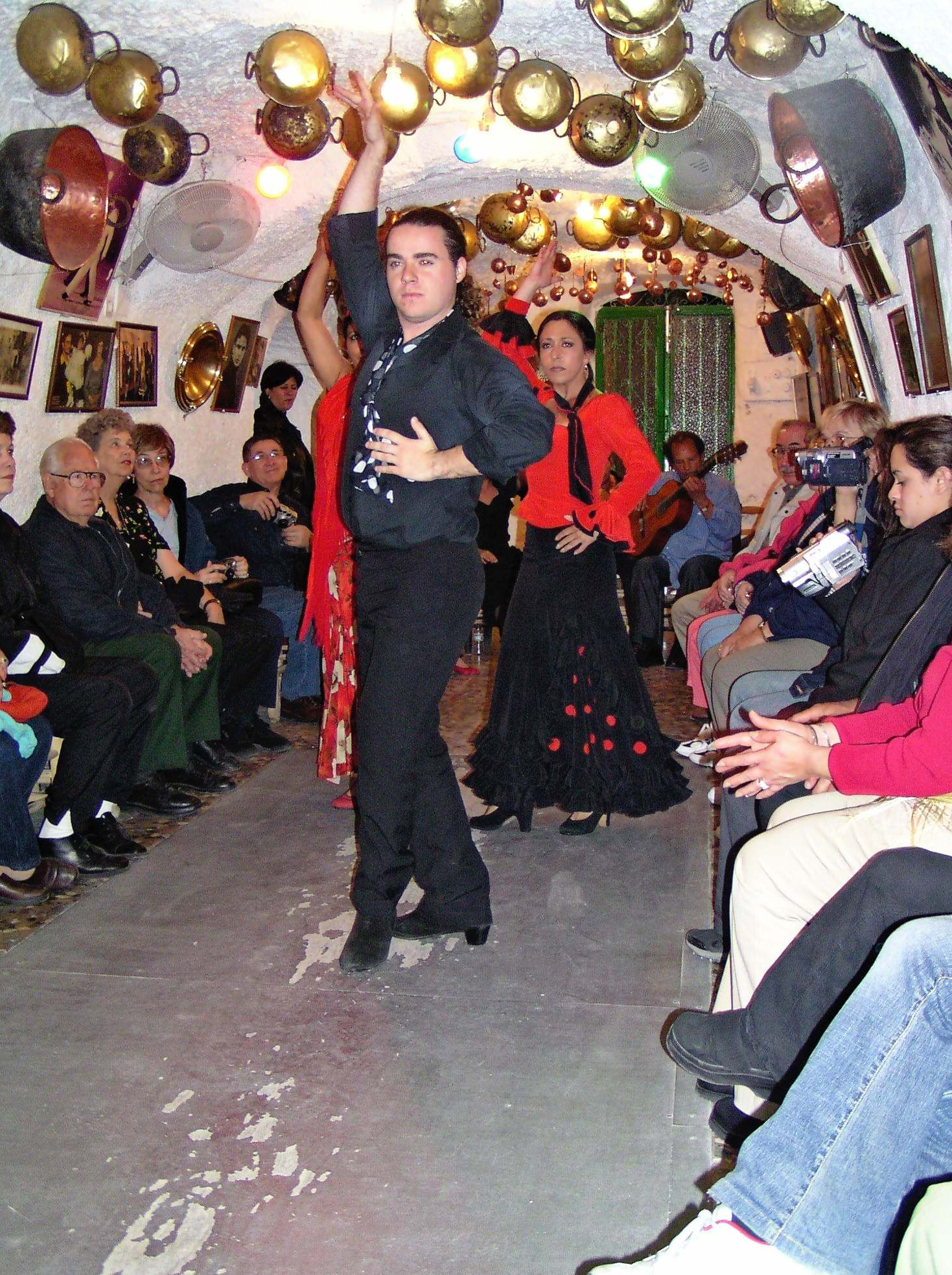
On the nearby hills, cave dwellings can still be found—homes originally carved into the slopes by Roma communities who settled in the area.
Today, some of these caves have been transformed into restaurants and performance spaces where visitors can experience traditional flamenco in a truly distinctive setting.

About the Author
Naoyuki Yamauchi was born in Okinawa City, Okinawa. After studying in the United States, he worked for an American trading company before founding Pantech Corporation, a Spanish tile distributor, in 1995.
He enjoys fishing, music, and collecting jazz records from the 1950s and 1960s.