We are pleased to republish “Spanish Tile Journey,” a travel column originally written by our company president, Naoyuki Yamauchi, for The Times Housing Newspaper, a local publication covering housing and lifestyle in Okinawa and part of the Okinawa Times Group.
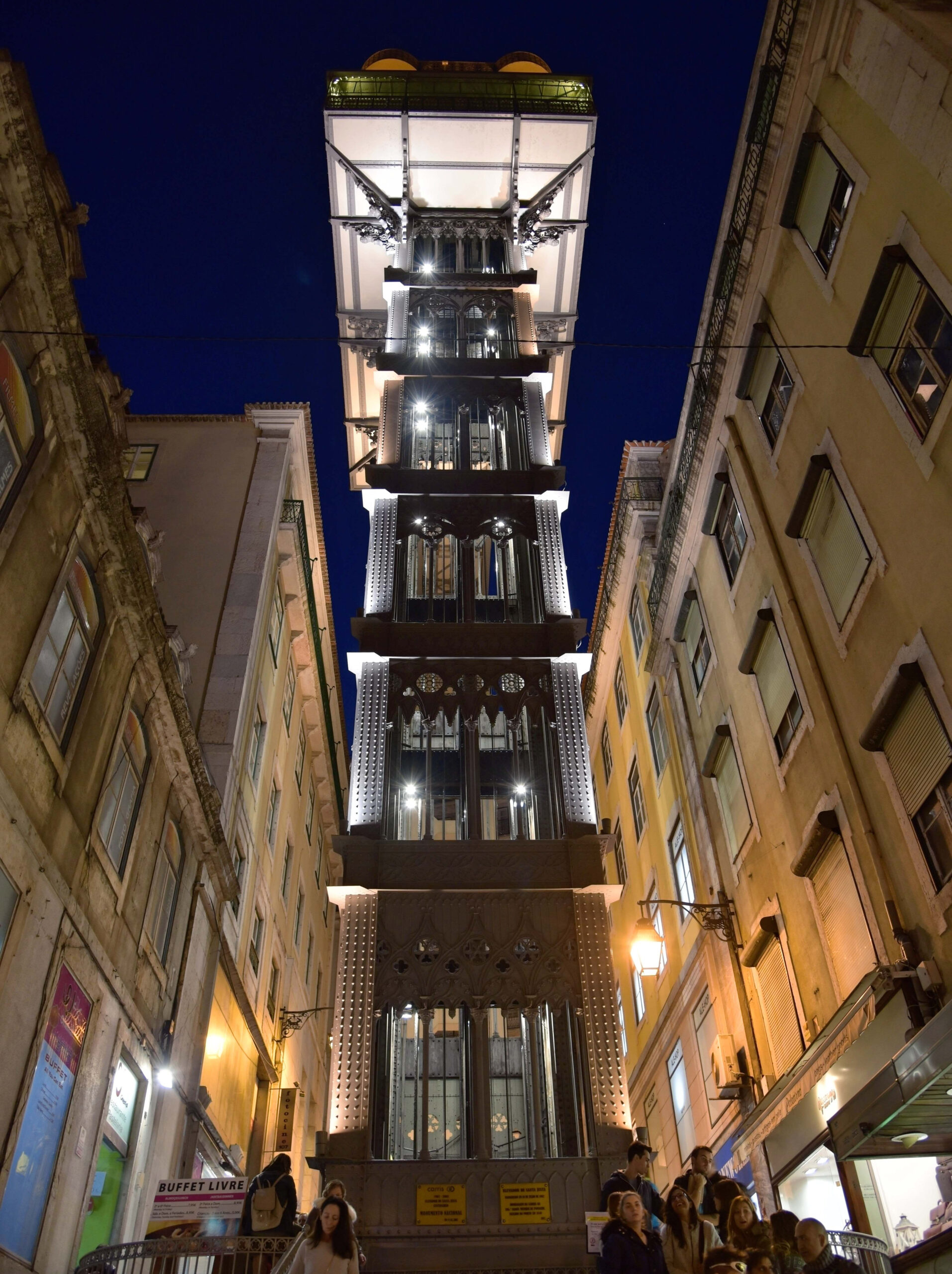
A Mysterious Iron Tower Glowing in the Night
Below me, the Tagus River flowed into the pitch-black Atlantic, while orange lights crowded the shoreline.
“We’ve really come a long way.”
Looking down at Lisbon’s nighttime scenery from the airplane, I found myself thinking just that.
This was Lisbon, Portugal, a port city on the western edge of Europe.
By the time I got out of the taxi from the airport, it was already midnight. And there, suddenly appearing before me, was the Santa Justa Lift, glowing mysteriously against the dark night sky.
Completed in 1902, this 45-meter-high iron tower—about 148 feet—still operates today, connecting the lower Baixa district with the higher Bairro Alto area.
At night, the illuminated structure almost looks otherworldly, as if a pillar of light were descending from an object floating in the darkness.
It is hard to believe that something so futuristic-looking was built more than 120 years ago.
Fado That Moves the Soul
Lisbon is home to many casas de fado—restaurants and music venues where traditional Portuguese fado is performed. Accompanied by guitar, female singers often sing of lost love and saudade, a uniquely Portuguese sense of longing and melancholy.
One night, I visited a restaurant called Linhares in the Alfama district.
At around 11 p.m., all of the scheduled singers had finished performing, and the groups of tourists began to leave. Just as we were getting ready to go, the female owner approached us and said, “You are very lucky tonight. Ms. Tavares is here.”
She introduced a woman at the next table who had just finished eating a codfish dish.
Then the woman began to sing.
Her voice was filled with sorrow and longing, and it touched us deeply.
The singer who had unexpectedly performed for us that night was Raquel Tavares, a well-known fado singer.
It became one of those unforgettable nights in Lisbon that stays with you long after the journey is over.
◇ ◇
One of Lisbon’s most charming sights is its vintage streetcars, rattling through the city’s old neighborhoods.
If you are sightseeing, Tram 28 is a great choice. It passes through areas such as Graça and near Lisbon Cathedral.
Get off at Portas do Sol Square, and you can enjoy a beautiful view from the hilltop, with red-tiled rooftops spreading out below and the Tagus River beyond. It is a scene filled with the character and atmosphere of Lisbon.
Lisbon is often called the “City of Seven Hills,” and its steep streets are everywhere.
Another important form of transportation for local residents is the funicular railway. There are three lines, but the Bica Funicular is especially worth seeing.
Its charming little cars climb the steep hillside with the Tagus River behind them, creating a picture-perfect Lisbon scene.
Lisbon is also home to the National Tile Museum, housed in a former convent. Inside, visitors can see remarkable tile panels, including beautiful works preserved in the chapel.
The tile-making techniques that reached Spain in the 15th century later spread to Portugal, where distinctive blue-and-white tile panels known as azulejos became an important part of the country’s decorative culture.
As you walk through Lisbon, you can still discover beautiful azulejos covering the exterior walls of old churches, historic homes, and other buildings throughout the city.
The Speed-Demon Taxi Driver
That evening, I arrived by train in Sintra, a town west of Lisbon.
I wanted to reach Cabo da Roca before the day was over, so I took a taxi.
The driver was a handsome man in his seventies who looked a little like Clint Eastwood, with a deep, gravelly voice to match. His name was Jorge, and apparently he had once worked as an actor in London. That explained his fluent English.
I soon regretted asking him, “Do you think we can make it to Cabo da Roca before sunset?”
He sped over hill after hill as if we were on a roller coaster—and somehow got us there in time.
I began to think he was more stuntman than actor.
I told him several times along the way that we really didn’t have to make it before sunset, but he seemed determined to get us there.
◇ ◇
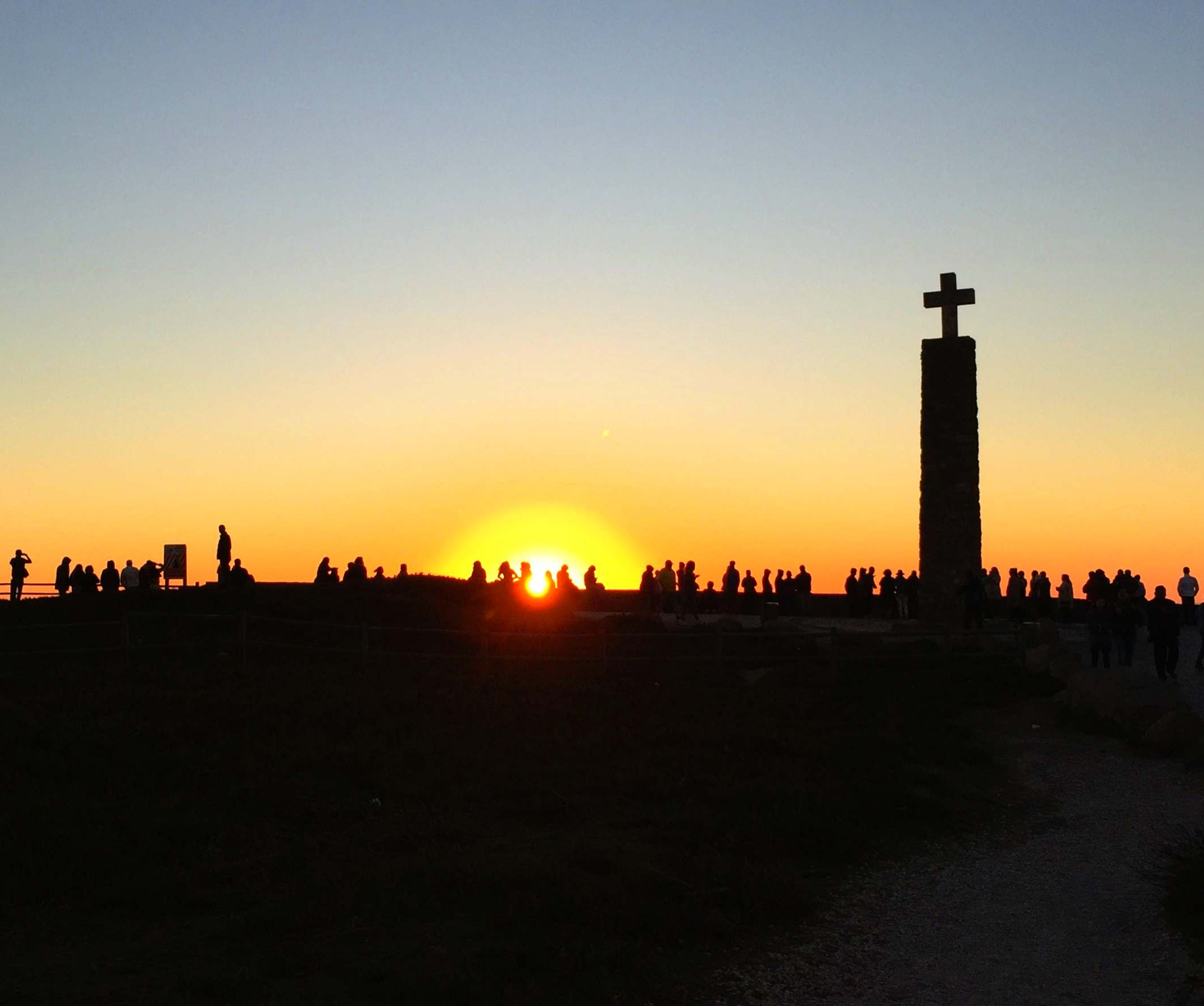
The sunset over the Atlantic was deeply moving.
There I stood at Cabo da Roca, the westernmost point of the Eurasian continent, looking out over the vast ocean beyond the cliffs.
It was the landscape that inspired the Portuguese poet Luís de Camões to write of this place as “where the land ends and the sea begins.”

About the Author
Naoyuki Yamauchi was born in Okinawa City, Okinawa. After studying in the United States, he worked for an American trading company before founding Pantech Corporation, a Spanish tile distributor, in 1995.
He enjoys fishing, music, and collecting jazz records from the 1950s and 1960s.